
Here’s the pattern almost every ruined garment has in common: someone got a stain, panicked, and went straight for hot water, a hard scrub, or whatever cleaning product was under the sink – without checking what the fabric could actually handle. The stain often comes out. So does the colour. Or the shirt shrinks two sizes. Or a bleach-safe method turns out to be the one thing that specific fabric absolutely cannot take.
Removing a stain isn’t just about the substance on the fabric. It’s about matching the removal method to what the garment can survive. Skip that step and you’re not saving the garment – you’re gambling with it.
Here’s how to do it properly: check the fabric first, then treat the stain.
This pairs well with our guide on 5 common laundry and dry cleaning myths if you want the fuller picture of what actually damages clothes at home.
Step 1: Check the Care Label Before You Touch the Stain
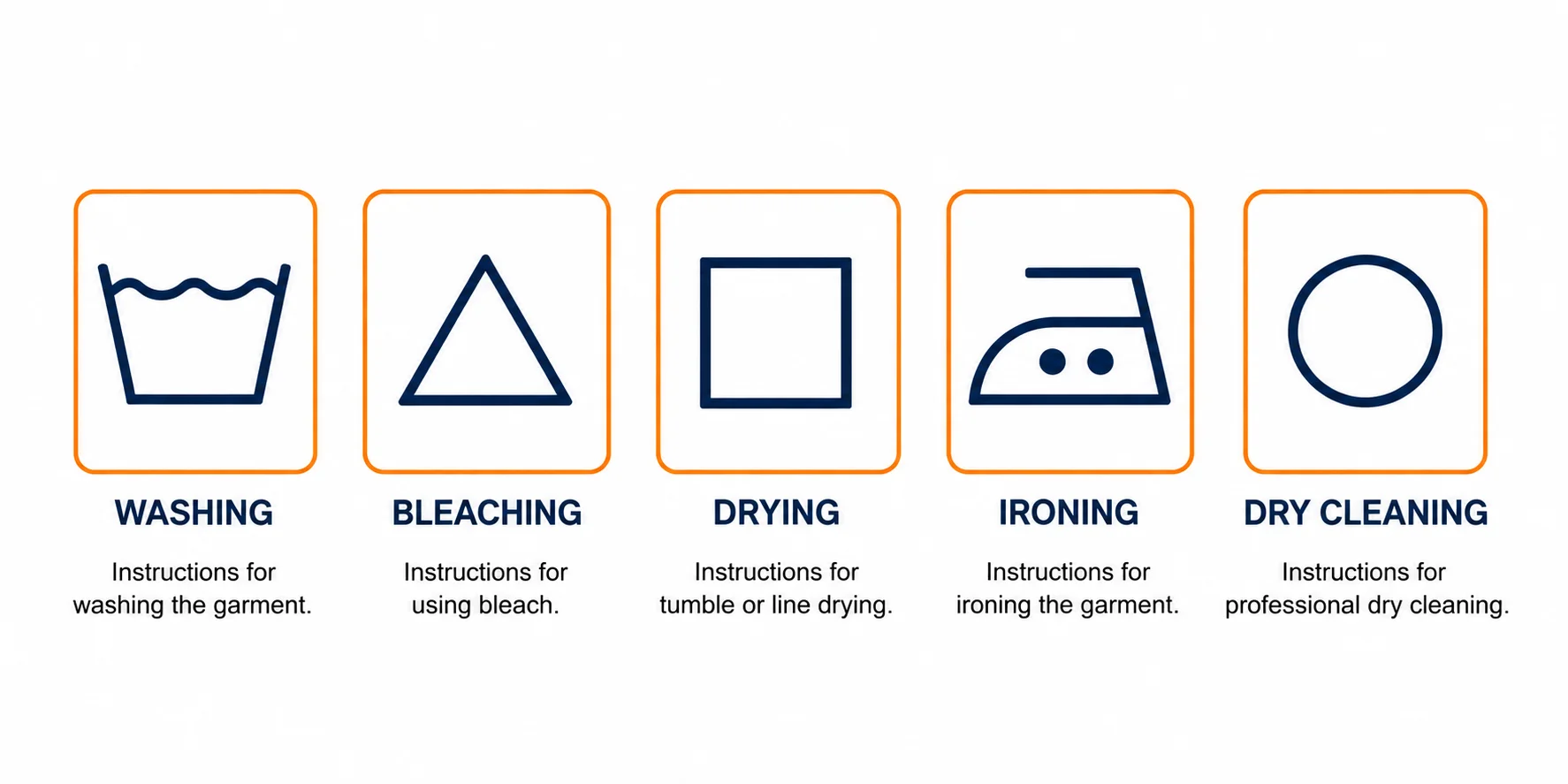
Before reaching for anything, take 60 seconds to check the small tag inside the garment. You’re looking for three things specifically:
- Can it be bleached? A triangle symbol with an X through it means no bleach of any kind, not even the “colour-safe” kind. Using it anyway is one of the fastest ways to turn a stain into a permanent light patch.
- What water temperature is safe? The tub symbol, if it has a number inside, tells you the maximum safe temperature. Hot water sets some stains (like blood and egg) permanently instead of lifting them, and it’s also what causes most shrinkage.
- Hand wash or dry clean only? A hand symbol or a plain circle means the garment isn’t built for a machine or an aggressive home treatment at all. For these, spot-test gently or skip straight to a professional rather than risking it.
If the label is faded or missing, treat the garment as delicate: cold water, no bleach, gentle handling.
These symbols follow an internationally recognised laundry care labeling standard, which is why a tub-with-a-hand icon means the same thing whether the garment was made in India or anywhere else in the world.
Step 2: Stain-by-Stain Removal
Once you know what the fabric can take, match the method to the stain.
Oil and Grease Stains
Blot (don’t rub) excess oil immediately. Sprinkle cornstarch or talcum powder on the spot and let it sit for 15-20 minutes to absorb the oil, then brush it off. Follow with a small amount of dish soap worked gently into the stain before washing at the safe temperature from the label. Never use hot water on an oil stain before treating it – heat sets the oil into the fibres.
Ink Stains
Place the stained area face-down on a paper towel. Dab (don’t rub) rubbing alcohol onto the back of the stain with a cotton ball – the ink will transfer onto the paper towel below. Keep moving to a clean section of paper towel as the ink lifts. Rinse with cold water and wash normally, checking bleach-safety first if any residue remains.
Wine Stains
Blot immediately, don’t rub. Stretch the fabric over a bowl and pour boiling water through the stain from a height (only if the fabric can safely take heat, per the label). For set-in stains, a paste of baking soda and water applied for 15 minutes before washing works well on most fabrics.
Turmeric Stains
Turmeric is notoriously stubborn because it’s a natural dye, not just a surface stain. Apply a paste of lemon juice and salt directly to the spot and leave it in sunlight for 15-20 minutes – the combination of natural acid and UV helps break down the pigment. Avoid hot water until the stain has visibly faded, since heat can set turmeric’s dye permanently.
Tea and Coffee Stains
Rinse the back of the stain with cold water immediately to flush out as much as possible. Mix one tablespoon of white vinegar with warm water (if the label allows it) and dab onto the stain before washing. For white fabrics only, a small amount of hydrogen peroxide can help, but test on an inside seam first.
Sweat Stains
Mix baking soda with a little water into a paste and apply directly to the underarm area. Let it sit for 30 minutes before washing. For yellowed sweat stains that have set in over time, a mix of equal parts baking soda and hydrogen peroxide (white fabrics only) can help lift the discolouration.
Blood Stains
Cold water only, always. Hot water cooks the proteins in blood and sets the stain permanently instead of removing it. Soak in cold water, then gently work in a small amount of salt or dish soap before rinsing. Repeat if needed rather than switching to hot water out of frustration.
Mud and Monsoon Stains
Never wipe wet mud – it just spreads the stain and pushes it deeper into the fibres. Let the mud dry completely first, then brush off as much as you can with a soft brush before washing. For the residual mark left behind, work a small amount of detergent directly into the spot and let it sit for 10 minutes before washing at the safe temperature from the label.
Rust marks from wet umbrellas or bags respond well to the same lemon juice and salt method used for turmeric – apply, leave in sunlight for 15 minutes, then wash. If clothes have been damp for a while and picked up a musty smell or faint mildew spots, a soak in water with three-quarters of a cup of white vinegar before the regular wash helps neutralise both the odour and the mould.
Step 3: Know When to Stop
Some situations call for a professional instead of another home attempt:
- The care label says dry clean only
- The stain is on a delicate fabric like silk, wool, or a heavily embellished garment
- You’ve already tried once and the stain has partially set
- It’s an expensive, sentimental, or occasion garment where a second mistake isn’t an option
Trying a third home remedy on a stain that’s already resisted two attempts usually does more damage than the original stain. That’s the point where professional dry cleaning – with the right solvents and equipment for that specific fabric – actually saves the garment instead of risking it further.
Frequently Asked Questions
Is it ever okay to use hot water on a stain?
Only if the care label confirms the fabric can handle it, and only for stains that aren’t protein-based (like blood or egg), which set permanently under heat.
Can I mix different home remedies together for a stubborn stain?
Mixing chemicals like bleach and vinegar, or hydrogen peroxide and ammonia, can create harmful fumes. Stick to one method at a time and rinse thoroughly before trying another.
Why did my stain get worse after I tried to remove it at home?
Usually one of two reasons: the wrong water temperature was used (setting the stain instead of lifting it), or a bleach-based method was used on a fabric that couldn’t handle it. Both are avoidable by checking the care label first.
What’s the single most important step in stain removal?
Speed. The longer a stain sits, the more it bonds with the fabric fibres. Treating it within the first few hours – after checking the label – gives you the best chance of full removal.