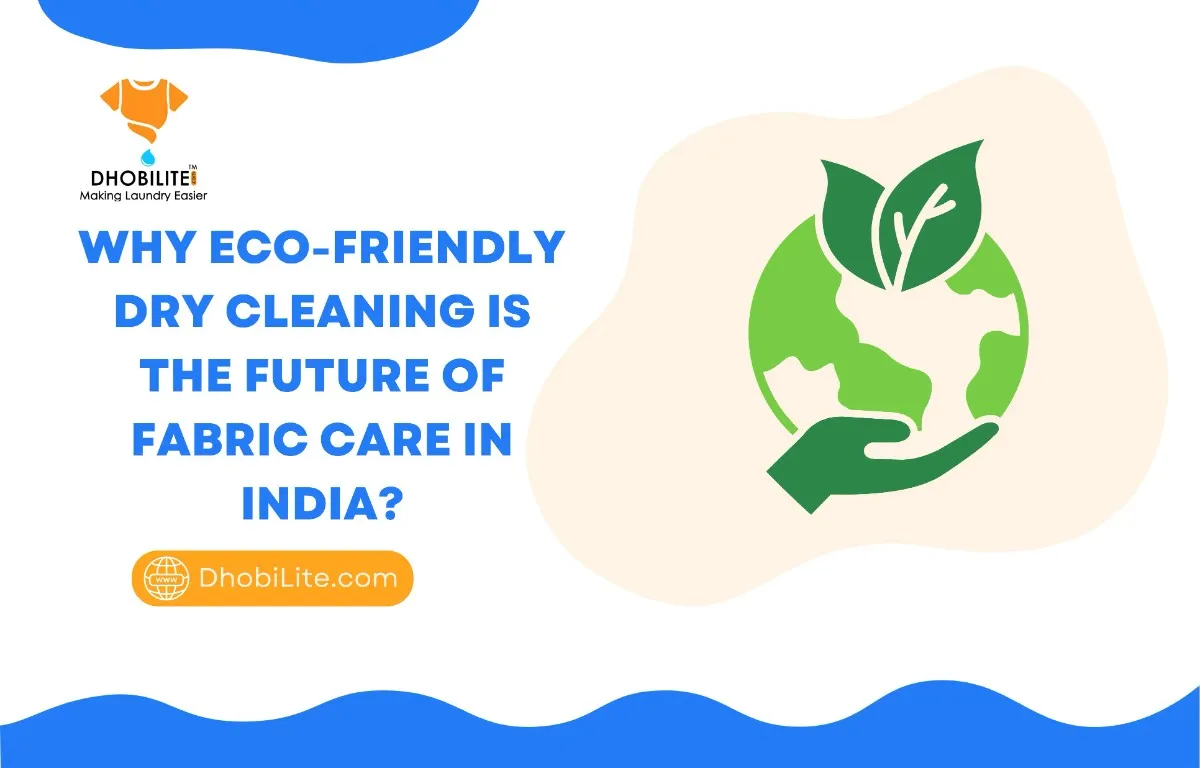
People have long thought that dry cleaning was the best way to keep delicate clothes looking and feeling good. But using harsh solvents like perchloroethylene (PERC) in traditional dry cleaning methods can be bad for your health and the environment. Eco-friendly dry cleaning is quickly becoming the gold standard for fabric care in India because people are becoming more aware of how important it is to be environmentally friendly.
This is why eco-friendly dry cleaning is not just a trend, but the future: it makes clothes cleaner and the world cleaner.
What Is Eco-Friendly Dry Cleaning?
Eco-friendly dry cleaning is a way to clean clothes that uses alternatives to traditional solvents that are safe for the environment, break down in water, and don’t use a lot of water. These solutions are better for the environment, safer for workers, and less harsh on fabrics.
Some popular green alternatives include:
- Silicone-based solvents (like GreenEarth)
- Carbon dioxide (CO₂) cleaning
- Wet cleaning with biodegradable detergents
These methods don’t let out harmful vapours, don’t pollute water, and make clothes last longer than PERC.
Why India Is Ready for the Shift
1. Rising Environmental Awareness
People who live in cities in India are becoming more aware of how pollution, water waste, and chemical use affect the environment. A Nielsen report from 2023 says that 78% of Indian shoppers would rather buy from brands that care about the environment.
This is affecting choices we make every day, like picking eco-friendly cleaning services.
2. Growing Market Demand
The organised laundry industry in India is expected to be worth $3.93 billion by 2033, with a compound annual growth rate (CAGR) of 4.6%. A big part of this growth will come from services that care about the environment, especially in cities and Tier 2 cities.
Laundry companies that offer eco-friendly services are getting ready to be at the top of this growth wave.
3. Regulatory Pressure
The Central Pollution Control Board (CPCB) and a number of state pollution boards are telling businesses, like laundry and dry cleaning, to cut down on the amount of solvents they release and improve how they handle water.
Eco-friendly dry cleaning fits in well with the changing rules, which makes it a safer long-term business model.
Benefits of Eco-Friendly Dry Cleaning
- Better for Your Clothes: Green options are better for delicate fabrics like silk, wool, and chiffon because they don’t change the texture, colour, or lifespan of the fabric.
- Safe for People: Customers and laundry workers won’t have to worry about skin irritation, bad smells, or health risks when using non-toxic solvents.
- Environmentally Responsible:
- No groundwater contamination
- Reduced air pollution
- Lower energy and water consumption
- Biodegradable packaging options
- Better Customer Perception: Offering eco-friendly dry cleaning can improve your brand image, win loyalty from premium and conscious consumers, and increase referrals and online reviews.
How DhobiLite Is Leading the Eco-Friendly Fabric Care Revolution
At DhobiLite, sustainability isn’t a marketing buzzword-it’s our core operating principle.
We use:
- Non-toxic detergents
- Water-saving processes
- Fabric-safe, eco-certified solvents
- Minimal plastic packaging
- Energy-efficient machines
Our methods make sure that your office clothes, silk sarees, or wedding clothes are clean, of high quality, and have as little impact on the environment as possible.
DhobiLite is proud to offer eco-friendly dry cleaning that is easy to get, cheap, and works well in more than 56 Indian cities.
FAQs About Eco-Friendly Dry Cleaning
Q1: Is eco-friendly dry cleaning more expensive than traditional methods?
Not always. Some green solvents cost more, but when you use them in bulk or in an efficient way, they are competitive in price, especially with subscription models like DhobiLite.
Q2: Can eco-friendly dry cleaning handle tough stains?
Yes. In fact, many modern biodegradable solvents work just as well on stains without hurting fabrics.
Q3: Are all laundry brands offering true eco-friendly solutions?
No. Some brands don’t use the term very strictly. Always ask about the exact solvents and methods used, or pick a brand you know and trust, like DhobiLite.