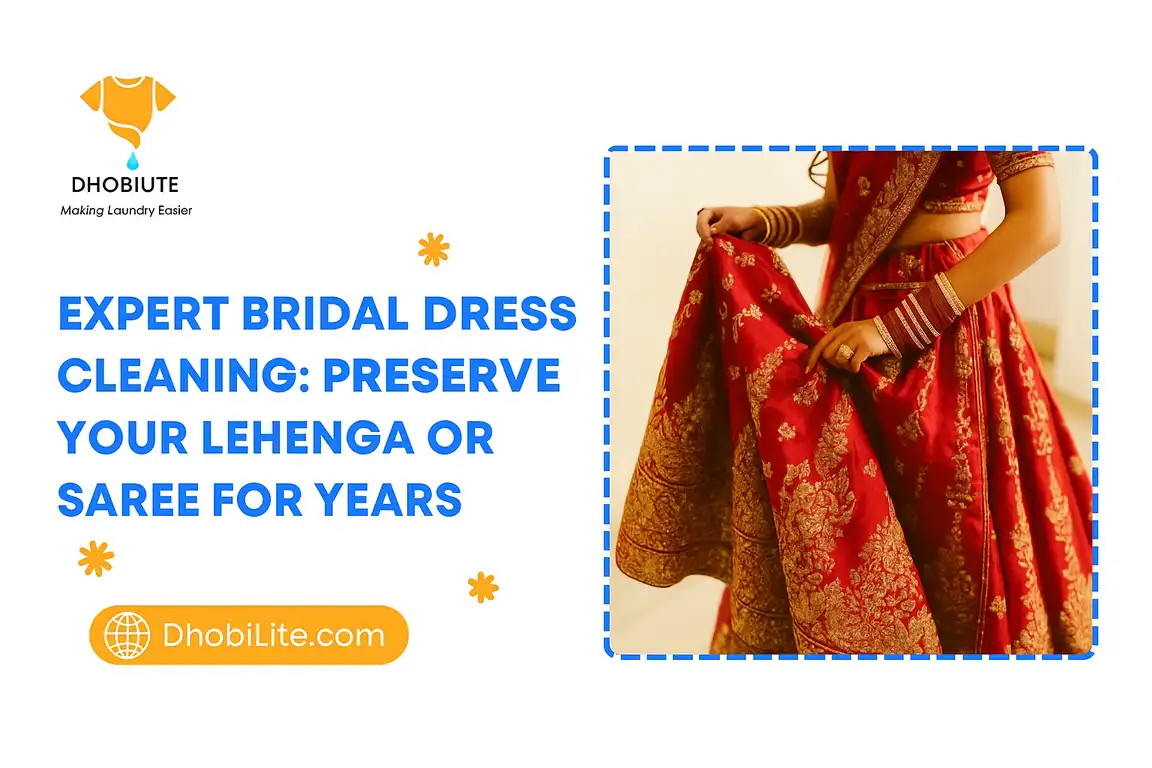
Your bridal outfit is not just another dress. It is emotion, investment, and in many Indian families, a future heirloom. Whether you wore a heavy lehenga, a classic silk saree, or a reception gown, the fabric has gone through a full day of heat, sweat, makeup, perfume, and food stains. If it is not cleaned and preserved correctly, all that work and memory starts fading far sooner than you think.
Speaking as someone who has seen thousands of bridal outfits come in and out of our professional dry cleaning units at DhobiLite, I can tell you this with confidence: what you do with your dress in the first few days after the wedding decides how it will look 5, 10, or even 20 years from now.
Why Professional Cleaning Matters So Much For Bridal Wear
Indian bridal outfits are not simple garments. They combine:
- Rich fabrics like silk, velvet, chiffon, georgette, tissue, or organza
- Heavy work using zari, zardozi, stones, crystals, sequins, mirrors, and beads
- Multiple layers: can can, lining, net, dupattas, trails, and veils
Trying to wash or scrub such an outfit at home is risky. Wrong detergent, excess friction, or even simple soaking can lead to:
- Color bleeding or fading
- Rust marks on metal embellishments
- Weakening of delicate threads and seams
- Permanent stains setting deeper into the fabric
Professional bridal cleaning uses fabric safe solvents, controlled processes, and manual inspection so that stains are removed while the structure, color, and embroidery of the outfit stay intact.
What Professional Cleaners Do Differently
A good bridal cleaning process is not just one wash. It is a sequence of careful steps designed specially for luxury garments.
1. Detailed Inspection Before Any Cleaning
First, the outfit is checked layer by layer:
- Makeup, sweat, and food stains are identified
- Weak seams, loose threads, or missing stones are noted
- Fabric type, color stability, and embroidery type are assessed
This inspection decides what method, solvent, and temperature will be used. Bridal outfits are never treated as “normal” clothes in a professional setup.
2. Gentle Solvent Based Cleaning
Instead of harsh scrubbing or soaking, professionals use controlled solvent cleaning to:
- Lift sweat, oil, makeup, and perfume deposits
- Remove visible and invisible stains without rough friction
- Protect zari, metallic threads, and delicate fabrics
The idea is simple: remove what should not be on the dress, without disturbing what makes the dress beautiful.
3. Steam Treatment To Revive Shape
Bridal outfits often get crushed in cars, hotel rooms, and changing areas. After cleaning, careful steaming helps:
- Relax the fabric and remove wrinkles
- Restore the original fall of lehengas, sarees, and gowns
- Freshen up the outfit without using aggressive heat
4. Embellishment Protection
Beads, stones, crystals, and sequins need special handling. Professional cleaners:
- Shield heavy work areas during solvent cleaning when required
- Use hand dusting and spot cleaning around embroidery
- Check for loose elements and handle the garment gently at every stage
5. Color Safe Handling For Delicate Fabrics
Silk, velvet, and deep bridal shades (maroon, red, magenta, bottle green, royal blue) are prone to color movement if treated wrongly. Professional setups test color fastness and use methods that keep the dye in place, so the outfit looks as rich after cleaning as it did on the wedding day.
How Different Bridal Outfits Benefit From Professional Cleaning
Designer Lehengas
Heavy lehengas have can can, layers of fabric, and lots of embroidery. Professional cleaning helps to:
- Clean sweat and stains from inner layers without flattening the flare
- Protect borders, panels, and intricate handwork
- Maintain the stiffness and shape that gives the lehenga its signature look
Silk, Banarasi, and Kanjeevaram Sarees
These sarees are often family investments and future heirlooms. Proper cleaning:
- Keeps the natural silk sheen intact
- Prevents zari from dulling or darkening too early
- Stops small stains from turning into permanent patches over time
Bridal Gowns and Reception Dresses
White and pastel gowns show every mark. Net, lace, and tulle layers are delicate. Professional cleaning:
- Removes floor dust, shoe marks, and food stains from the hem
- Cleans lace and net without tearing
- Helps maintain that clean, crisp, original color
When Should You Get Your Bridal Outfit Cleaned?
The best time is: as soon as possible after the function is over.
- Ideally within 3 to 7 days of the event
- Definitely before packing it away in a box, suitcase, or cupboard
Fresh stains are far easier to remove than old ones. Sweat and perfume also oxidise over time and can cause yellowing if left unattended.
You should also consider professional cleaning:
- Before reusing the outfit for another function
- Before altering or redesigning it (for a reception, anniversary, or sister’s wedding)
- Before handing it down as a family heirloom to the next generation
How To Store Your Bridal Dress After Cleaning
Cleaning is only half the story. Storage decides how long the outfit remains in good condition.
- Always store in a breathable muslin or cotton bag, not plastic
- Keep it in a cool, dry place, away from direct sunlight
- Add silica gel pouches to help control moisture
- Use acid free tissue paper between folds and under heavy embroidery
- Refold the outfit every few months to avoid deep, permanent creases
Signs That Your Bridal Outfit Needs Professional Attention
Even if the wedding is long over, your dress might be asking for help. Look for:
- Yellowing or uneven discoloration on light fabrics
- Makeup, food, or sweat marks that were never properly cleaned
- A damp, musty smell from long storage
- Visible color loss or roughness in certain patches
In many cases, a professional cleaning and correct storage can still revive and stabilise the garment so it looks fresh again and lasts longer.
Final Thoughts: Keeping Your Bridal Memories Alive
In Indian families, a bridal lehenga or saree is much more than a one time outfit. It often appears in photos for years, is shown to relatives, and may even be worn again or passed down.
By choosing professional cleaning and proper preservation, you are not just protecting a garment. You are protecting the emotions, blessings, and memories stitched into it.
If you want expert care for your bridal outfit, you can always explore DhobiLite dry cleaning services or connect through the DhobiLite laundry service page for guidance on bridal and premium garment care.
FAQs
1. Can I clean my bridal dress at home?
It is not recommended. Home washing can damage embroidery, weaken delicate fabrics, or cause colors to bleed. Professional cleaning is safer, especially for heavy, embellished bridal wear.
2. How soon after the wedding should I get my dress cleaned?
The earlier the better. Ideally within one week. Quick action stops stains from setting and helps the fabric retain its original color and texture.
3. What is the best way to store my bridal outfit after cleaning?
Store it in a muslin or cotton bag in a cool, dry place. Use acid free tissue paper between folds and around embroidery. Avoid plastic covers and damp areas, as they can trap moisture and lead to yellowing or fungus.